
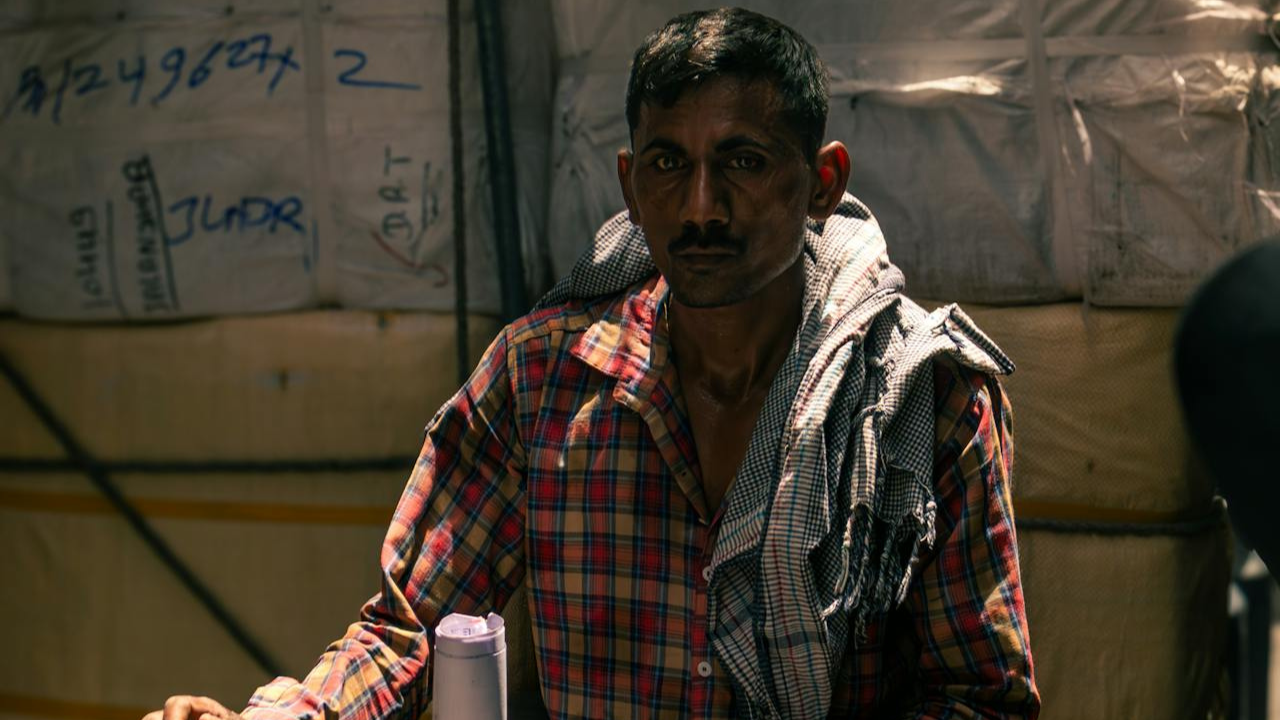
He didn’t ask for money. He asked for work.
Ramprasad, a 38-year-old father of two, came to us with just one request:
“Bhaiya, bas koi kaam mil jaye. Pet bhar jaaye, izzat se.”
A few months earlier, he had lost his wife to illness. His daughters — ages 6 and 9 — had stopped going to school. He tried finding work at construction sites, then at vegetable markets, but the jobs were unstable and the earnings barely enough to feed them.
He didn’t want to beg. He didn’t want free rations.
He just wanted to earn — with dignity.
That’s when our Livelihood for All campaign stepped in.
We sat with Ramprasad, listened to his story, and helped him chalk out what he could do.
He had experience in buying fresh vegetables from the mandi.
He just needed a thela — a simple cart — and a little setup support.
Within days, we arranged one.
Painted it. Added weights, crates, a weighing scale, and a cash box.
It wasn’t grand — but it was his.
The first day, he cried.
Not because he was overwhelmed. But because for the first time in months, he returned home with ₹350 earned by his own effort.
That evening, his daughters had a full meal — and their first ice cream in a year.
The next week, he bought them school shoes.
When we met him again, he wasn’t just a thela-wala.
He was a father standing tall.
A cart became more than a cart.
It became stability. Identity. Dignity.
That’s the power of livelihood support. It’s not about giving someone fish — it’s about handing them a net and saying, “We believe you can.”
Today, Ramprasad sells vegetables every morning and takes care of his daughters in the afternoon. He’s saving up to send them to a better school next year.